
PODCAST
Propelling Growth to Fuel Your Legacy
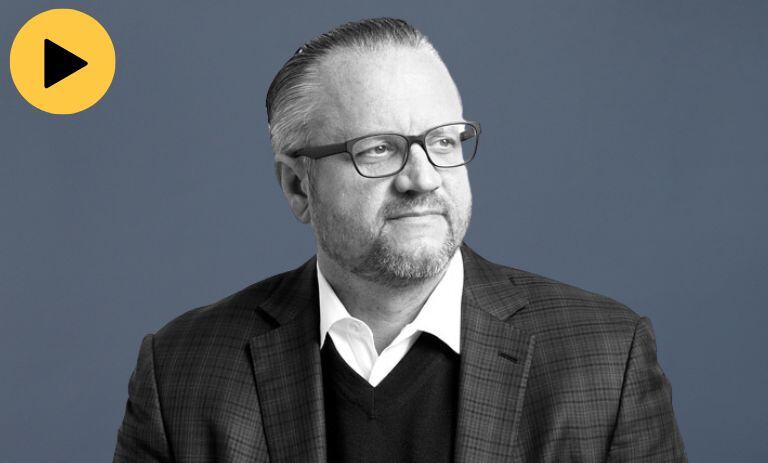
Listen as Susie McEuen, former VP of Strategic Markets Sales at Oak Street Funding, interviews David Bahnsen in this special season 6 episode! David Bahnsen is the founder, Managing Partner, and Chief Investment Officer of The Bahnsen Group, a national private wealth management firm with offices in Newport Beach, New York City, Bend, Nashville, Minneapolis, Austin, Phoenix, and West Palm Beach, managing over $5.7 billion in client assets.
Listen wherever you get your podcasts!


Key Insights
.jpg)
Client Compatibility is Key
David Bahnsen, The Bahnsen Group
Client Compatibility is Key
David Bahnsen, The Bahnsen Group
Hiring Great Advisors
David Bahnsen, The Bahnsen Group
Hiring Great Advisors
David Bahnsen, The Bahnsen Group
How To Grow in Challenging Markets
David Bahnsen, The Bahnsen Group
How To Grow in Challenging Markets
David Bahnsen, The Bahnsen Group
Capitalizing On What Works
David Bahnsen, The Bahnsen Group
Capitalizing On What Works
David Bahnsen, The Bahnsen Group
Transcript
Susie McEuen
Hello. Thank you for joining OnPoint with Oak Street Funding. Today our topic is propelling growth to fuel your legacy. First of all, want to thank David so much. It's a privilege and pleasure to be able to have you today on our podcast. Thank you so much for your time. You're extremely busy, and we're just really grateful for joining us today. We have a lot of listeners and viewers out there that are really interested in learning from you because you have really grown successfully, especially over the last past five years. Correct me if I'm wrong, but you and I became in contact about five years ago, and at that time you were at about 1. 5 billion in assets under management and now you're way over five billion in assets. You had when we started working together two offices, Newport Beach, New York City, and now I think you're getting ready to open up your eighth location. Is that correct?
David Bahnsen
Our ninth location, yeah.
Susie McEuen
Oh, ninth location. Okay. One slipped in there before picked up on it, so congratulations. We really appreciate the time today. I think what we want to do is get your viewpoint on how you've been able to grow your business and do the things that you've been doing as far as being on a lot of the different networks, providing market commentary and analysis, as well as turning your responsibilities over to other leadership people on your team and then also giving back or I should say helping your community as well as being a writer. Maybe if you don't mind, share a little bit of background, how you got started as an advisor in the business.
David Bahnsen
Sure. Well, I appreciate the invite, Susie. Looking forward to this conversation with you and certainly have enjoyed getting to know you and your team over the... I guess it's probably been five and a half years plus change now because we began some discussions in late 2018 and into 2019. Like you said, we were somewhere over a billion dollars then and we just passed six billion this last month now, and so it's been a pretty busy five year period here. But I began life as an advisor, like a lot of people in the independent channel. I started off in the wirehouse world and was a trainee at PaineWebber about 25 years ago, and they were quickly bought by UBS. What we now know as UBS, their United States wealth management business came about because of their acquisition of PaineWebber. I built up a business there as a sole practitioner and moved to Morgan Stanley about a year and a half before the financial crisis. Morgan Stanley was really where my business grew a great deal and started to build a team around myself. I got through the financial crisis. I actually grew quite a bit there from 2007 until 2014, and I became managing director at the firm. We had a lot of success, but there was one thing that was abundantly clear to me and that was that the future of the business was going to be in the RIA channel and for more entrepreneurial type advisors, which I considered myself to be, you could do certain things here and there in trying to build a team at a big firm, but to really have the independence and the autonomy that I desperately craved, I needed to go do that out on my own and so spent the second half of 2014 preparing and then in early 2015 made the leap and left Morgan Stanley. Next year, we'll celebrate 10 years of independence and we have our eyes on becoming a$ 10 billion firm, and we believe that will happen in the next few years here.
Susie McEuen
Well, congratulations. One thing I want to mention and congratulate you on, recently, August the 9th, you were on the New York Stock Exchange and got to ring the bell and it was a celebration because, correct me if I'm wrong, I think you rolled out a new EFT-
David Bahnsen
ETF. ETF. Yeah.
Susie McEuen
...TBG Dividend Focus, so that is amazing. That's another thing that you've been doing here in the last 12 months besides growing rapidly, expanding your team, opening new offices, but also rolling out an EFT. When we got together and met over five years ago, I think at that time you were buying a book and a lot of the listeners and viewers are always interested in how to grow inorganically. Maybe share with me how that transition went and how did that propel your growth after that as far as buying that book?
David Bahnsen
Yeah, it's interesting deal for us because it's the only transaction like that that we have done, and that was a succession planning case, and actually as we're sitting here now, the gentleman whose book I bought is in the last couple months until his official retirement. We've kept him around on a salary for the last year or so, and he's just been a wonderful addition to our team. But basically we bought a sole practitioner, a small$ 200 million book that was just meant to be kind of a retirement situation for him and that we were going to incorporate his book into our business. We haven't done a lot of inorganic growth. We've looked at a lot of deals, but because of our organic growth mousetrap, it really uses up most of our resources, and yet, as you know, there is a lot of inorganic growth opportunity in the industry right now, and indeed many firms and aggregators that are doing a significant amount in the inorganic and M& A space. That particular deal, and we did a transaction together around it, was really just meant to be a very traditional succession planning case, use debt capital to acquire somebody and their book, spend a few years absorbing that book and getting to know their clients, and then as they go off, having other advisors take over that relationship. That book has long since been distributed for relationship purposes to other different advisors. We've kept that practitioner around still just kind of overseeing a couple key relationships and just generally being available to assist, but it really is an interesting process because I think so much of our focus as an industry is on cultural compatibility with the firms, the team, the people, the advisors, the staff, and making sure that that's all very compatible. What we learned from that transaction, there wasn't a team, there wasn't a brand, it was just a single advisor and he's fit in great, and actually a number of years ago we ended up hiring his son as well who has now climbed the ranks through our firm and is the director of our financial planning department, and so a lot of great fringe benefits came out of that. But I do think it taught me that you also have to look to the compatibility of the clients, and I don't ever read about that and I don't ever hear about that. We hear so much about the compatibility of the professionals involved in a transaction, but because we attract such a unique niche of clients, it's something that we have to be particularly conscientious of to make sure that the clients fit with who we are and what we're doing. That transaction's been successful, but it's the type of thing that helps you kind of learn how you might do it differently in the future.
Susie McEuen
Great information. That leads into what we do here at Oak Street Funding. To your point, it's not just about the buyer and the seller being compatible and it's a good fit there, but also, like you said, those clients because I've had situations... I've been lending money to RIAs and independent advisors for over seven years and also I've been lending money for over 35 years to business owners, and it's absolutely got to fit. You've mentioned your mousetrap and that's your secret recipe for success of The Bahnsen Group growing as well organically like you have, and congratulations. I know I get a lot of phone calls from advisors that are trying to do what you're doing and just taking a step back, coming from the wirehouse and being a business owner and running an entire investment advisory firm is not for everyone. When they... Independent or advisors are coming out of the wirehouse or be wanting to become independent, have never ran a business. That I'm finding out, and that's one reason why we wanted you on this podcast today because you have been able to hit all those bars and obviously it's been a great ride for you and your team and we just appreciate learning some of this information. The one thing about the gentleman that you bought the book from, I would say we like as a lender keeping on the seller to help with the transition and the continuity, makes that book stickier and more successful. There are some lenders out there that really want to push that seller out, so that is fantastic. The one thing that was interesting to me as we have worked together over the years is that you started transitioning your role. There's a lot of discussion out there with the advisors out there trying to grow. They can't be all things to all people. You're the managing partner, the founder, you're the chief investment officer for The Bahnsen Group, but you do all these other things as well. Maybe tell us how you transition and also finding the right talent to join your firm because you're extraordinary for sure. You even say that on your website, you're exceptional as far as how you provide white- glove service to your clients and it's got to be the right fit.
David Bahnsen
Well, I think that there has been a lot of evolution in how we've addressed this. I don't know that everything we've done has been the right way to do it, but it's worked for us. It has to be authentic, it has to fit the skill sets, the personalities of the people that we have. I have talked to my team and my leadership team over the years a great deal about the division of labor that we have and different strategies for optimizing how we run our business. We have a very strong growth mindset. It used to be that we really wanted to bring in$ 50 million a month of new business totally organically, and we did that for several years in a row, were very proud of it and don't believe there are a lot of teams and companies out there doing that kind of organic growth, but it's now gotten up to 80 to 100 million a month has become our new aspiration. We've had two years in a row where we were very, very close to$1 billion of new business brought in and we believe this year we're going to pass that amount. When you're talking about that kind of organic growth, I think most RIAs would love to have that sort of organic growth, but what I've learned is all of the growth comes with an ongoing need for more resources within the business. It isn't like I can just feed the top line of revenue and more clients and not feed the engine with more fuel, the more advisors, more planners, more operations, more investment solutions. We have a full tax department. We do soup to nuts tax preparation and strategy for clients. It leads to a lot more need for the kind of professional management of the business, but I'm an advisor. I grew up on the client side of the business and I run money, and so to have professional management and client advisory and portfolio management, and then the number one biggest thing is just the kind of feeding of the growth of the business. I'm on television a lot, podcast, writing, written books, weekly commentary. This content creation and thought leadership is not for everybody, but it's our secret sauce and it's the reason we've grown how we have. When we get a lot of incoming leads, inbound leads of people interested in working with us, it's largely as a result of them being attracted to that content platform so I have to continue feeding that. Those have been four different jobs that I've worn, and over the years we've tried to reallocate my portfolio to some degree. The biggest thing we did, which again involved a transaction with you and the bank, was I had about 150 clients I was responsible for day- to- day relationship with, and now that's down to about 25. We needed to find a way to democratize a lot of that client relationship. I still stay connected. I'm doing some meeting with a client every single day, sometimes multiple meetings per day, and then I'm also heavily involved with getting on for 15 or 20 minutes with a prospective client of one of our other 20 advisors or helping to close an account or go visit a client who's already been a client for a bit, but now I'm dropping in for 15 or 20 minutes of a meeting, not running an hour and a half or two- hour meeting myself. That's the one area that we were able to create a lot of scale is democratizing the relationship management. That maybe pushed that part of my job description from 40 or 50% down to 15 or 20%. I was able to free that up into more of running the business, more strategic planning for the business, and then that growth engine of content creation, writing and speaking and being just sort of the brand ambassador of what we're doing. That's driven our growth, pushed up our CAGR, our compounded annual growth rate, to 29. 2% per year, and that's all a byproduct of that content creation. Then finally, Susie, the element that we were able to also provide a little lift to me was on the portfolio management. I used to do all the analyst calls myself, all of the idea generation, all the vetting. I continue to serve as the chief investment officer, but we brought my partner, Brian Szytel, who you know, on as a co- CIO, we've hired a couple really first class, top shelf equity analysts. Our investment solutions department now across all people is eight or nine members of our team. That CIO work also was able to be aided and abetted with other resources and Brian working in that co- CIO role. I still have my four job descriptions, but two of them we were able to lower the allocation and that enabled us to increase the other two, and thereby create a more scalable strategy for the future.
Susie McEuen
That's fantastic. As far as finding the right talent for your firm, let me ask you how many employees are you up to now for The Bahnsen Group?
David Bahnsen
We are at 70 employees and right now have active searches going on for three new ones. That's one thing I've given up on is telling myself, " Oh, we're done hiring for a while." Every time I think that, we end up having another couple people in a quarter that need to come in. I believe, Susie, when we first met that we may have been at 20 people, probably 15, but no more than 20, and we're at 70 full- time people now.
Susie McEuen
Well, that's fantastic. It's really... A lot of the different conferences I go to and I talk to RIAs and independent advisors, they're just really finding a hard time finding the right people in the right seats. I personally kind of wonder what is going to happen with the next generation as far as getting people interested in becoming into the investment advisory world because we're going to need that talent for this next go round for generation. Obviously you've been successful finding people. I think also location kind of helps too. You've got some great locations between Newport Beach, New York City, now West Palm Beach, Minnesota, you're Nashville as well, Texas, Arizona.
David Bahnsen
Yeah. Then we have a satellite office in Bend, Oregon of all places and are getting ready to open in Grand Rapids, Michigan. Bend and Grand Rapids may not seem like major population centers, they're not the kinds of cities that the big law firms and the big wirehouses go to, and yet they're really strong markets for us. We think Grand Rapids is going to be a bigger market for us than Chicago is for a lot of places. Nashville, Phoenix, Palm Beach, Austin, these have been rapidly growing cities for a lot of people, but we've kind of had a unique set of circumstances that have allowed us to grow in different places. But the point you were kind of making there is really important, and I don't think I've focused on it enough, that we really improved our ability to find talent accidentally by becoming a multi- office firm and not having to limit our hiring to Southern California or New York City. There's great talent pool in New York and Southern California and it can be a bit more expensive, it's higher cost of living, but that's not even the issue as much as just once you've added Texas, Arizona, Tennessee, you really have increased the pool of candidates you can hire from and that's been really advantageous for us.
Susie McEuen
Well, with your expansion in all these different markets, is there anything that you want to share as far as an aha moment that maybe, " I wish I would've done things a little bit differently than..." Because you obviously have done a lot in the last five years as far as the growth. Anything that stood in the way, any concerns or even positives, like aha moment that, " Wow, this really did work because you have the secret sauce of where you are today?"
David Bahnsen
Well, I do think that a lot of aha moments not just for us and not just in this business, but for any entrepreneurial endeavor, a lot of it is a realization that you maybe couldn't have seen or couldn't have known, but once you do see and once you do know, you have to grab a hold of it. You have to capitalize on it, really take advantage of a certain strength or opportunity that comes your way. We had a homegrown strength that I was not smart enough to realize was going to be such, and once I did it became incumbent upon us to really build our strategy around that. So much in the financial advisory profession I think is often people throwing things at a wall and seeing what sticks, and that may be a really good way to do things for a period of time. I think it's very common, but there is a moment at which you kind of realize what works for you. I think people are better off going all in on one strategy as opposed to just continuing to try to throw a lot of different things that maybe aren't as authentic, aren't... You're not building a lot of momentum around them. In our case, what worked for us is something we decided to really build our whole firm around. The one area that I wish we had more time to devote to... It isn't that I'm looking for inorganic growth, but our sweet spot for hiring advisors is not to hire people with a big book or big rainmakers. That's what so much of the business is focused on is everybody wants those people that are really good rainmakers.
Susie McEuen
inaudible.
David Bahnsen
We feel that we can bring growth to the advisors who work for us, so unlike the industry that might want people who are mediocre advisors but great rainmakers, we want people who are great advisors, that care about clients, that are accustomed to being relational and professional, and we are going to provide them the business growth, that rainmaking, that business development. We kind of have that mousetrap already in place. My problem is simply that I don't have the ability to go out and resource where those people might be because if you're going to find one who's a good fit, you're probably going to do 10 or 20 different leadings and I don't have the bandwidth for it. We rely on some of that to fall in our laps, but our advisors are not hired to be rainmakers or hired because they already have an incumbent book. We give them the clients, we give them the leads, but we need them to be philosophically aligned with us and people who are really to their heart and soul client- centric. That's hard to come by, that character, that experience, that professionalism, and yet when you look across our advisors, they may have started at a wirehouse and not had a lot of success building a book, but they've been incredibly successful building up a wonderful P& L within our firm. That's something that is counterintuitive to a lot of people in the business, but that's what I mean by having to really grab a hold of what worked for us. You mentioned Nashville, and that was a big experiment for me. We had no incumbent business, we weren't acquiring anybody, and even the advisor that I hired to start had never been an advisor before, had$ 0 assets under management. We just signed a big lease in a big office, a beautiful downtown building, and the gentleman we hired was I believe 29 or 28 years old at the time. He had been a pitcher in major league baseball and gotten injured and was sitting as an internal wholesaler, an asset manager. I had gotten to know him, believed in him, and then we hired operations and hired a planner and some resources around him. One of our equity analysts is out of that office, and we've brought in over$ 400 million in the first two and a half years out of that office.
Susie McEuen
Wow.
David Bahnsen
That's the kind of just purely organic growth that is very profitable, very exciting, but also required us to go make that investment into putting our name on the wall, and that's what we did.
Susie McEuen
Congratulations. That's amazing because I was kind of curious about the Nashville location, so thanks for sharing that. Well, as we get closer to the end of the year, and it's going to be an interesting ride through the election and everything, as far as business owners out there what three items would you mention as far as they should be thinking about as we wrap up 2024? Anything come to mind?
David Bahnsen
Well, I mean, I think that there will be a lot of temptation to be distracted by the election. There's always clients that want to know where the election's going to impact markets and what should they do and not do. I think most practitioners in the advisory profession, whether it's the election now or another geopolitical event later or economic activity, need to stay very focused. Markets have largely been a tailwind, not a headwind for most of the last post- COVID years, let's call it four years now, and yet I do think that the mentality that we need good markets to generate business is completely, totally wrong. We view challenging markets as a golden opportunity to gather assets because we are in constant communication with our clients, we're providing all sorts of perspective and value and commentary and touch and communication all the time, and during bad markets a lot of advisors are not. I think prospecting becomes like shooting fish in a barrel during difficult markets, so who knows what markets will hold between now and the end of the year or next year, what have you? But that opportunity will come. I would encourage people to look at challenges in the market as an opportunity for business development, not a time to have to kind of put the pencil down and sit on your hands. We've always viewed it with a more contrarian perspective.
Susie McEuen
That's fantastic. Well, to wrap up things, maybe talk a little bit different aspect for the listeners that are going to be listening to this podcast. You are a very successful writer. I did order your book, Full- Time: Work and the Meaning of Life, and I'm planning on taking this on vacation so I can read it and concentrate on it. You've written many books, and I think, correct me if I'm wrong, you dedicated this to your father.
David Bahnsen
I did. That book, Full- Time... My father passed away in his late 40s. I was only 20, and so I talk about it in the book, just biographically what his passing meant to the kind of launch of my young adult life and ultimately my career and my kind of purpose here in the world. My dad was my hero and my best friend, and so it was nice to be able to write a book that I could dedicate to him that because it was a topic that he had such a profound influence on me... But I've written four books, and only one of them is even indirectly related to markets. I mean, my second book, The Case for Dividend Growth Investing, which is what we do, we've largely developed a strong affinity for dividend growth investing, that's obviously a book that we can use with prospects and clients and that tells the story of what I spent at the time 20 years developing a worldview and investing worldview around. But the other books, they may peripherally touch the economy, touch the culture, but they're more topical books that are related to things I'm passionate about. There's going to be people that agree with those things. There's going to be people that don't. Some of them maybe are people interested in being clients and some may not be, but I just sort of came to the realization a number of years ago that that was the way it was going to be anyways. Whether I had gone on television and talked about something or written a book about something, people were either going to like you or not like you, agree with you or not agree with you. I try to present everything as civilly and charitably as I can. I think that's especially important in this particular moment. But that book, Full- Time, is making a kind of cultural, economic, religious, and yes, socio- political case for a stronger view of work and a stronger existential understanding of how important our work is to who we are as people, to our own identity. It's a topic that I've been passionate about a long time, so I most certainly would've sent you one. You didn't have to buy it, but I appreciate inaudible.
Susie McEuen
I don't mind. I'm glad to do it. The next time I see you, I'll have you autograph it.
David Bahnsen
Well, I'd be happy to do it. I've been really pleased with the response to the book, and hopefully it'll be a message that encourages some people.
Susie McEuen
Well, thank you for sharing that. Is there anything else you want to share with the viewers and listeners today? We really greatly appreciate you being on here. Anything else you want to add before we wrap up?
David Bahnsen
Well, no, Susie, I really appreciate the partnership. I think that it's been wonderful to get to know you guys in the bank over the years, and we've certainly been able to do a number of things together. It's important to... Just like hiring a team of people, but also other technology partners, custodial partners. That's one thing about the world of independence is you have a lot of stakeholders in your business. A lot of people, vendors, suppliers, and different elements of strategic partnerships are very important. In our case, the banking and lending relationship we have with you guys is one of those and I'm grateful for it, and hopefully some of the comments on the podcast today have been helpful.
Susie McEuen
Thank you so much. inaudible.
David Bahnsen
Well, thank you very much for having me.
Susie McEuen
Thank you so much for your relationship, and we really appreciate your time today. Wishing you the very best for a very successful end of 2024. Thank you, David.
David Bahnsen
Thanks so much.
Susie McEuen
Thank you all for joining today OnPoint with Oak Street Funding, propelling growth to fuel your legacy. We appreciate your time today and joining David Bahnsen and myself, Susie McEuen, vice president strategic markets, Oak Street Funding. Have a great day.