
PODCAST
The Surplus Economy
with Marc Chandler
In this episode of the OnPoint Podcast, Matt Staninger, Market Research Analyst at Oak Street Funding, sits down with Marc Chandler, Chief Market Strategist at Bannockburn Capital Markets, to discuss Marc’s new book, “Surplus: The History of Too Much and the end of Economic Primacy,” as well as results from the recent 2026 Midterm Elections. They hit on topics such as the implications of a surplus economy, the latest Federal Reserve decision to hold rates, how to better manage abundance, and what “the end of economic primacy” could mean for markets, policymakers, and society.
Hello, and welcome to OnPoint, a podcast by Oak Street Funding where we sit down with industry leaders to bring insights to the topics you want to hear about. I'm your host, Matt Staninger, market research analyst here at Oak Street Funding, and let's get OnPoint. Today, I am joined by Mark Chandler, managing director and chief market strategist at Bannockburn Capital Markets, and we are going to be discussing Mark's new book, Surplus, The History of Too Much and the End of Economic Primacy, as well as results from the recent twenty twenty six midterm elections and what they could mean for the future. We'll touch on the implications of a surplus economy, the latest Federal Reserve decision to hold rates, how to better manage abundance, and more. Mark, it's a pleasure that you're joining me today. Thanks for having me, Matt. So let's get started with when the average person hears the word surplus, they often think of prosperity or extra for all. How does surplus become destabilizing rather than purely beneficial? That's really an important question, I think, because, you I've talked about the surplus with people. Their first instinct is, well, my family is making... Having a difficult time making ends meet. And that is really the the the paradox or the irony. It's really the... That on one level, we do have a surplus. And on the other hand, it's not evenly distributed. And that becomes a problem. Many people, it's true. I mean, I think of it in The US, for example, about twenty percent of American children are on some kind of supplemental nutrition program despite The US having the richest farmers in the world, the most successful agricultural sector. And despite that, so many of our children are hungry. And I I can see this in different ways as well. Give you another example. The average... So so we have the income distribution. Men in the top 10% of the income distribution live about twelve to fourteen years longer than a man in the bottom 10%. And to me, that's the really the the problem that I'm really wrestling with, this conflict, seeming conflict between freedom and equality. So that's talking some about the larger, even life implications that you can have. And within the book, you connect modern surplus to widening inequality, financial speculation, and political discontent. How did those forces tied back to a scaled global economy that's highly effective but producing well? What the thing, Matt, is that I really focused on it. That... I I I sort of think that, I'm continuing different, discussions from hundreds of years ago. One of them, almost a hundred years ago, Keynes said that he thought the economic problem of scarcity, he called it the economic problem, would be solved by 2030. And I say we solved it a bit earlier than he anticipated. And I wanna sort of ask the question, now what? The problem of production has been solved. We can produce more goods and services using fewer people than ever before. The problem again is what do we do with that? You know, they say it is more plastic in the ocean than fish. My wife and I, I just see how much garbage we generate. Solid municipal waste, mostly packaging. And, of course, the packaging, whether it's plastics, which means oil, whether it's paper, which means wood, it's these finite resources that are being absorbed, and then we just discard them and put them in a landfill. So I'm concerned about both sides of that equation. So it's true, and I think... And I don't wanna take anything away from the incredible success market economy have had to generate wealth beyond our imaginations, things that we take for granted. My great grandparents had to go outside to use the bathroom. There was no running water. Central heat, central air conditioning, these are modern luxuries, which we now think are as necessities. I feel personally called out there as I took out my garbage this morning thinking of most of its packaging. I had to take out an additional chair that had broken over the week, which was all lumber. So very, very relatable. I think we all can relate to that as well. And I I think that we we don't really... I don't think we fully appreciate it that that that we throw out that packaging, that there's a lot... There's energy that goes into making it. And there's there's resources that go into it, and we we... We're throwing that out. It's not just that we... Like, we have this disposable type of society, but we have businesses. Many businesses have built an obsolescence to their products. That's partly what fashion is. I... Maybe it's me. I can't tell the difference between a 2025 model of a car and a 2023 model. And yet, by having new models, it's it's in fashions. You know, I think about the... You buy a new cell phone, and up until very recently, you had to buy all these new attachments with it. Businesses want... It's sort of like what people criticize pharma for. Not curing us, but getting us hooked onto medicine that just maintains or manages whatever problems we have. Same thing businesses do, broadly speaking. And this is the challenge. While what's good for the individual business might not necessarily be good for society as a whole, and that's the challenge. Right. And we've seen some lawsuits come out from very similar things as well of batteries purposely only having a certain amount of time before they're experiencing experiencing obsolescence. So that really covers the surplus side of things really well and really defines what you meant by surplus there. The other half of this title involves the end of economic finacy. What do you mean by that, Mark, and why do you think traditional economic measures may no longer be enough to define progress? It's a really good point. Think... Because I really have this historical perspective. Even though I spend my days trying to understand what's going on in the capital markets, I have a master's in American history. I have this historical perspective. And I think that, I'm continuing this discussion. Keynes writes this essay, early part of the twentieth century, says... Calls it the end of laissez faire. There's gonna be a role for government around that time, he he argued. And then there was a a person that we think of as an economic management guru, Peter Drucker. He was a young man in Germany as fascism was rising, and he started documenting this. And he calls his book of that era, the end of economic man. And so I'm trying to continue that dialogue, the end of economic primacy. Here's what I think it means. Most of the time in our business careers, if we come up with an argument that says this way is more profitable, this way is more efficient, it carry... It it has sort of gravitas to it. It carries the argument. And I think that that was no longer the case, partly because capital itself... It's not just these widgets or other products that are in excess supply, but capital itself. And I'll you a quick illustration for the capital being in surplus. The US ten year yield is below 4.9% right now. Inflation is about 3.7%. So even though the nominal rate looks high, the real rate when we adjust it for inflation, which is really what ultimately we pay as businesses, is relatively low. And interest rates are low because it's the supply and demand. The supply of capital exceeds the demand for it. That is the efficient, effective use for it. So the end of economic primacy really gets to this idea that capital has reached a point like other products do of diminishing returns. You know, when I was younger, I first moved to New York from Chicago. I was broke. I would have a pizza and a Coke every day for lunch. It was about $2.50. Come Friday, you could pay me to have another slice of pizza. It reached a point of diminishing returns, and I think capital has done the same thing. And because capital has reached its point of diminishing returns, it means that other interest... Capitalism doesn't just produce goods and services. It produce interest and values. And it's sort of like, I'd say Abraham Maslow's hierarchy of needs. You know, after individual, we have our shelter, our clothes, our food taken care of, we can think about... We have the the, like, sort of the the the bandwidth to think about other things, art, philosophy. And I think that's what happened to society, especially The US, Western Europe, parts of Asia, high income parts of the world that have had, for the most part... I know there's some important exceptions, but for the most part, peace and prosperity. And this allows us to move up the Abraham Maslow's hierarchy of needs and think about other things. So for example, in the midterm elections, many communities who had the initiatives on their ballots had some questions about AI. In New York, where I've spent the last thirty years, people in New York, they recognize that there is the geological formation for fracking, but they decide not to do it. And so this just illustrates, I think, that there's other interests that rise, that challenge just what's profitable, partly because, again, it... It's really predicated on us having conquered scarcity and now having a surplus of capital. So taking one of those conversations that's been around for a long time and really applying it to today's measures where capital has has really outpaced even the physical material that's been discussed for a much longer time. You know, this is what the the shocking thing, I think, is that before... Great financial crisis then during COVID. At its peak during COVID, there was $17,000,000,000,000 of bonds that had negative yield. A negative yield is just like a mind. It's just a... It's hard to get our heads around it. Well, I mean, the only thing I could compare it to is when I go to a ATM that... Not my bank, and they charge me two dollars to take out a $100. It's almost like a negative interest rate. But imagine $17,000,000,000,000 of negative yielding interest rates. You know? And and right around as COVID first broke, oil prices went negative too. So you you had a barrel of oil. You couldn't sell it. You had to pay someone to get it off your... To take it from you. So I think this is the kind of a perverse world that's possible when it is... When there's such large surplus. It's amazing. And and bringing in the thoughts of AI, the the boost of productivity, it's really starting to become the helmet more of a day to day discussion as well. Yeah. I think these are big picture issues, and I think that, what I hope the book achieves is just helping, frame and begin what has to be a very important discussion. So we talk about asset prices, capital flow, productive capacity. Those factors are all central to today's surplus economy. How should investors or market observers think differently in this environment? I think one thing that it means surplus, I think means that it's hard for the social relations to reproduce itself. So I think about capital. If you have a very low real rate of interest, then how did... How do you how do you accumulate more? And, you know, Keynes talked about this, I think he called it the euthanasia of the renterer class. He thought that interest rates would go so low that renterers... And that's it, like, the the... This is a word at the time for coupon clippers. People who live off of their income from loaning out to other people. He thought that interest rates would be driven so low by the surplus of capital, they would they would wipe them out. They could do that again at a practice, just clip coupons and live off of that. I think that it tells me that interest rates are gonna be... Are gonna... Real interest rates, so we adjust for inflation, are are are low. I gotta stay low. And I think even, like, with this AI build out, everybody's talking about how many bonds these, these, hyperscalers are issuing and how big it is compared to the US federal, the US treasury's bond issuance. You know, the the S and P 500, they could fund the whole AI build out with about two and a half years of revenue. And the AI build out, if I... It looks like... It looks huge. It is really... If if you take a look at overall US investment, it's basically flat, which is to say that the AI boom in investment is offsetting, compensating for the decline in investment elsewhere. And so I'm not sure that these AI build out really absorbs the surplus, and I think that's what we slapped your vessel with. Right. And in this net, essentially, net zero situation, do you then see this surplus concept? Do you see it plateauing at this point in time or do you see it decelerating, accelerating? What what kind of a trend do you see this looking into 2030, 2040, and beyond? Because I think that the the surplus... That's right. You know, I I found this guy who... Actually, before I joined Bannockburn First Financial, I worked at a bank, and there's this guy who also worked at a bank about a hundred years before me, who advised presidents. And he argued that we had a surplus of capital back then in the late eighteen hundreds. He talked about his capital congestion. And I think that we find other social institutional arrangements to help absorb the surplus and to deal with it. But it only lasts for a few year... For, say, a couple of decades. I think about the Reagan Thatcher solution coming out of the crisis of the seventies, when it lasted maybe from the early eighties, through maybe the tech bubble. And it's twenty years. And so now we're we're stuck with it again. And I think what happens, it is my concern, and I try to try to, like, write it up in the book, is that I think that we lose the vocabulary. We lose the vision. And so every... Like, every generation has to come to it anew. And I'm trying to pull on these threads of this idea that capitalism... It's like, you know, we have a lot of friends that, very critical of capitalism, market economies. And I'm not in their camp. I I believe celebrating the success of market economies. And I think we've achieved so much. And now I wanna say, now what? I mean, I think about when I was growing up, I grew up very low middle class family, kinda typical of the time, single mother, children, but a father who was a band... Who abandoned them, who didn't give financial support. I have a brother who's a year younger. One year, we we had two pairs of shoes between us, a pair of gym shoes and a pair of dress shoes. And whoever had PE classes that day got the gym shoes. Fast forward, my son is through college now, but I... When he was in college, he had he had four, maybe six pairs of running shoes. They were fashion statements. And I just think that this just illustrates, like, how far we've come, but how much we slept and wrestle with this issue and the inequality that generates from it. That's my concern, is that there's a profound sense of unfairness. When a guy like, Bezo, who's CEO of Amazon... And I I heard this quote from him. He said something to the effect of he has so much money. He can't spend it all on Earth. To me, the the... It's just like it it it just, like, strikes me in this way that surplus is such a stark name for it. I say, well, allow your allow your workers to get higher pay. Sometimes they might mean unionization. Lower the price of your goods. But, no, he has too much money to spend on earth. And I think that just illustrates just this profound sense of unfairness. I I I appreciate that he works hard. We all do. And and what the income one gets... I think that I have a lot of friends, I think, who shoulda were born on third base, and they think they hit a triple. That's a funny way of looking at it. I appreciate you sharing all all of your story and your upbringing from that as well because you... You've gotten to see a a wide area of the spectrum both from personal experience and what you've been exposed to. That that creates some hopefulness. Of course, the Jeff Bezos is a little bit of a... An outlier in what the typical situation is, but there's there's that ultimate feel of hopefulness in there. And that's how you describe this book as well as ultimately hopeful. So what kind of institutions, policies, or cultural shifts could help society better manage this abundance that... That's being described and where these outliers could exist? Yes. It is a really important question. I'm actually the type of person where very reluctant to tell other people how to lead their lives. And instead, I wanna I wanna suggest, really, that there's two paths. If we continue on this path of... I mean, I give you a con... Another concrete measure, you know, now that the election has passed. Here's what happened. In the year 2000, the top 100 Americans contributed about 0.25% of their campaign funding for the national election, a quarter of 1%. In 2024, our most recent national election, seven and a half percent. And so I I think this is really the... Where we we... I don't know. I mean, besides campaign finance reform, which seems to be, I wanna say that there seems to be a bipartisan agreement to talk about it, but not do anything about it. And I think that... I think this is the problem is that I I I recognize... So what I'm trying to do in the book is really identify... Sort of frame the problem. And to me, the problem, our our founding fathers of America had a very revolutionary set. And that's why that's why we call it American Revolution, not just a war for independence, but we had a we had a revolution in mind. And this revolution was this radical unification of freedom and equality. That... What we mean by freedom, or what our founders meant by freedom, traced back to the ancient philosophers. Freedom was self determination. You know, when I was at... I taught at NYU, New York University. They have a center for global affairs. I taught it for over twenty years. And every year, would ask my students, if tomorrow the government decided that there would only... That there's too many breakfast cereals, then they go down to these breakfast cereals at a grocery store, you get a whole aisle full of breakfast cereals. Imagine if the government said, tomorrow, we're gonna have something that's soggy milk, like cornflakes, something that doesn't get soggy milk, like, say, Cheerios, and then some kind of granola healthier cereal. If you only had... If the government said you only have those three breakfast cereals going forward, I'd ask my students how many would think that their freedom was less. And my students would typically say yes. And that is to say that we've sort of morphed freedom, self determination, shaping the community in which one lives into consumer choices. I don't know how to arrest that. I think the first thing to just to be is mindful that this is what's happened. And to go back to this idea of freedom being shaping the community in which we live in, I saw this breakdown of the civic responsibility during COVID. I think that, you know, imagine if the government were to say tomorrow, we're gonna build a place. We can come in and sit all day long. You can borrow things based on your signature, promise you we turn it in two weeks. I just think that after we've gotten rid of public restrooms, public water, we we would not have the civic, like, wherewithal to have public libraries. And so I wanna really... So that's why I really say that I'm trying to bring back some... Sounds very conservative, some old fashioned ideas and values and to look at how far we've deviated from them and see if we see if not... See if we can go back to some of those values that bring back together freedom and equality, I think, is the key. And without that, I'm afraid that we end up going back down to that world in which the young Peter Drucker was writing about in the... In Germany in the nineteen thirties. Fair enough there. And I know you started that by saying you can't really tell others how to run their lives or how to run their livelihoods, but let's get into a little bit about these potential solutions. They're, of course, going to be highly subjective with today's society and with with where surplus is really stretched to, a lot of those are also going to be relatively unprecedented. So little spoiler alert in the... Into the book here. Can you take us through a little more color on the thought process of a progressive income tax and what those levels and constraints would be on market forces? Sure. I I think that those are, like, very difficult issues, and I try to avoid taxing, like, say, taxing income. I think, ultimately, if we're gonna try to fix this problem of inequality, something will have to be something will have to be done. And I think maybe it's not so much income. Maybe you'll be focusing on wealth. Imagine this. Imagine you have a tax like they do in some states in The US, which tax based on the size of the motor of your car engine, which is like a wealth tax, subtle wealth tax. I I think that there's a... I don't think that this type of talk about, like, we don't... We can't have billionaires or things like that. But we need to remember at the same time that what's happened in our lifetime, say, going back to the early eighties, maybe even the late seventies, tax rates for corporations has fallen sharply. The same over the time they have a surplus of capital. What I mean by that is not not like our clients, small, medium sized businesses, but the large multinationals, they're buying back their own stock rather than building new capacity or innovating. So we so we... So our lunch is being made by Chinese producers. And here we are in, say, the auto sector giving back money to shareholder because the businesses can't think of a more profitable place to put it. So we do have a tax a tax on, say, share buybacks, but doesn't look very effective. Raise the tax, for example. This is not this is not the thing of, like, soak the rich. This is really thinking more about our civic responsibility and thinking about the danger. And to me as a as a as a strategist, I'm not only concerned with the upside. I'm concerned with the downside. So, like, you go to a movie theater, you go on an airplane, they say, you know, make sure you know where the exits are. Well, what's the downside of this? And I'm afraid that this profound sense of unfairness, and not just in The US, we've seen it explode in Europe in the last several weeks, widespread demonstrations. And it seems to me with the common theme is this profound sense of unfairness, whether it's the French students, whether it is whether whether it is the renters in Spain and Portugal, widespread sense of unfairness. And I I think that we have to recognize the sense, and I think what it means is it's a messier political environment. The center is not holding. And I don't... You know, we we can talk about the US midterm, but you see this in Europe as well. You know? Look at what's happened. The the far right has won their first state election in Germany. Next April, the French will have an election, and for the first time, Le Pen, who's the far right candidate, nationalistic, anti immigrant, anti EU, looks like she... Not only is she running ahead of the polls, but many people expect her to win, which is why the ECB president Lagarde, it seems like, is resigning early to allow for the current political process, current political parties like president Macron to help name the successor rather than have LePed perhaps in April. And so to to me, these are very profound political issues, and I'm afraid that if we just... We don't do anything, which is, of course, a possibility. We don't do anything, what happens? And I think the drift is very profound and in a more antidemocratic direction. So that brings us to to another area of discussion and kind of alluding to some of those recent events happening maybe even well beyond that in this in this modern day, very, very fast, robust society. What are the most unpredictable aspects of a surplus environment that we're currently seeing? I think one aspect of the surplus they were seeing is that we take it for granted. Again, the the fact that interest rates are low. So what do we do with the surplus? I I think about all these things that in The United States has happened that we... To find outlets for the surplus. One of them, I I think, is... And I... It's not a moral issue for me. We've legalized gambling. I gamble myself. I like a good poker game. Occasionally, I'll bet on the Kentucky Derby. I tend to lose money there. But I I don't have a moral... There's no moral problem with gambling, but I think about what happens when you legalize gambling and that the government legalizes it and and sanctions it by saying that you could go ahead and do this. And I think that what... You see what happens in communities, especially men, particularly vulnerable to the pressures and the... And just this family stream. And I think about legalizing drugs too. It's one thing to have small scale people or entrepreneurial types, but then to legalize it. So the other way, absorbing the surplus. What are people doing with their money? And I think that it it really speaks to, like, again, civic responsibility, civic duty. And I think if not... I'm not speaking out of altruism. I learned during COVID that that homeless guy who was sleeping outside my house with COVID made my family unsafe. And so how can we help him to make my family safer? How to make... How to help those kind of people that make your family safer? And I think we have to really think about these things because, otherwise, again, I think that we just move in a in a bad direction. So the surplus, I think, means that, of course, as individuals, we're paying high price for our mortgages right now. But when you adjust for inflation, interest rates aren't really that high. And when the price of something is not high, people tend to use it and, like, overuse it. And I think that that's where we are, that capital itself has a tough time to reproduce itself, the middle class. You think about... My son went to a small liberal arts college in Ohio, and I think I paid about $70,000 a year for his tuition. These days, liberal arts college, small liberal arts college, student gets a lot of personal attention, gets to pick a lot of classes, and that kind of thing. A $100,000 a year. A new car is $50,000 a year. Median family in the... In America only makes about $65,000 a year. So we have this real problem of... And I think this is where the the... Sort of where the rubber hits the road. Expectations that you do the right thing. You study hard at school. You'll get a good job. You'll get a good income. You'll be able to support a family. Increasingly, that seems less and less likely for people. And I think that... You know, I'm the first one in my family to go to college. My father was a plumber. But even as a plumber, he was able to support a stay at home wife and four children. We can't do that on one salary these days, unless perhaps you're a CEO of a big Internet company. But for many of us, we are struggling to make ends meet while we see so much of the surplus around us. We work hard. We do the right things, and yet the sense of unfairness goes across demographics, goes across class lines, religion, you know, it it seems to cut cut across, the whole population. Wherever one is, one sense it has this profound sense of unfairness. And I I think that means that things cannot go on like this without some radical changes for good or for bad. I'm optimistic because I think ultimately, sort of like what Winston Churchill said about America. They're kind of America. He said to do the right thing, actually, they've exhausted the alternatives. And I think we've we've exhausted a lot of alternatives. So, Mark, I think we talked a little bit about what that post scarcity progress should look like. What should we really be measuring instead of simply growth or wealth creation then to to help fuel a stronger post scarcity environment? No. I... You know, it's a it's a good question. I think there's... I think one of the things that have happened, because of this great inequality is people are now questioning the GDP. It was never really designed to be this overall measure of of, happiness or prosperity. It's really just a measure of how much goods and services an economy produces. It tells us nothing about distribution, which is part of the problem. Because of the distribution issues in The US, it means that increasingly, the people talk about this k shaped. A lot of the consumption is being fueled by those who have. And who... Those who don't have, how are they fueling their consumption? Borrowing, consumer credit, home equity loans. These things have really weakened the household balance sheet even as we make ends meet through this. Our wages aren't really enough. In fact, the last five or six months, wages in The US haven't kept pace with inflation. So we are becoming poor in real terms just as the needs and, you know, the... For for mobility goes up. We can't count on education being the key access to mobility the way the way we could sixty years ago. Very good. Thank you for sharing those insights on, again, your new book, Surplus, and and, newly released, of course, that's out available at this point in time. Let's get shifted over to a a very recent topic here that's ongoing, that's been relatively surprising the most, the midterm election. What stood out to you most as we... As we've seen quite substantial results here? Well, I think that what what what surprised everybody, even though that a lot of the polls were suggesting it, there really was this blue wave. But it wasn't... It's not really unprecedented. I think you'll find that, in... I think it was Obama's first term. He even lost more house, seats than the Republicans did just now. So I'm I'm I'm hesitant to, like, read too much into this. I know a lot of people who voted for Obama, who then voted for Trump. I'm hesitant to call it the... These kind of elections as, like, some kind of, like, a major turning point or some kind of shift in American political climate. I think we need to see the presidential election to help confirm that. But the other thing that occurs to me with the election is is how little things might change. You know, we're looking at a US budget deficit this year of around 6% of GDP. It looks like it'll be around the same next year. And I think that the... If there's one issue that I think that has has really come to the fore, probably before the election, it was already already showing some signs of cracking this whole AI meme. The AI build out, the... You know, it's it's been important for driving inflation for those AI type of products. It's helped drive The US trade deficit. It's helped drive US growth. If it's cracking, won't that have implications for Fed policy? And I think that the election made people... You know, what we saw happen, both as the results were coming in Tuesday night. And then again, on on on Thursday, we saw Asia foreigners in general sell US assets. They were selling US equities. And in America, we began buying US equities on Wednesday after the election. The Nasdaq closed higher, but there still are cracks in the in the AI meeting. And we're seeing the the ramifications of that as people question the AI. Will the democrats regulate it? And and and is it gonna be a state regulation? Is it gonna be federal regulation? What about the build out for data centers and the individual initiatives that seem mostly to reject them? And so, I I think that the AI element and the... And instead of the knockout effect on Fed policy is is probably is probably the most important part of the election. I I really think that we we confu... As participants in the politics, we sort of confuse the partisanship with the bigger picture. I don't really see a a robust statistical relationship with how the markets respond to the midterm elections. What I do see, though, it might be more the presidential cycle. First, I would recognize that in the fourth quarter, so the quarter of the midterm election, stock market typically does well. The most robust statistical cycle relationship with the election is a third year of a presidential term. The S and Ps typically on average go about 14%, which is twice as much in any other year of the presidential cycle. 2027 is year three. So it suggest we ought to be a bit optimistic about the stock market as we enter, you know, we we finish up this year and enter into next year. But I don't really see a... I'm not sure how much are we gonna see of concrete differences. I I worry sometimes that... I go I go to a restaurant and and they offer me a soft drink, and they say, you want Pepsi or you want Coke? I'm afraid that our politics might be very similar. Of course, for us partisans, we feel very strongly. We prefer Coke or we prefer Pepsi. But I think that from a big picture view, I think that most of the debate between republican democrats takes place within the Tory party in The UK, for example. Very good. Great insight there, first of all. Now trying to connect that to this surplus environment, we see these wild swings and and it's almost become normalcy from a macro view. You're trying to break it down into a day to day perspective. We're seeing hundreds of billions of dollars regularly get pumped into or pumped out of individual markets. With this surplus environment and with this this change in what we're seeing congressionally, what call to action would you give or would you advise the incumbent congressional electees described trying to connect with with the surplus environment, trying to connect with all these wild swings that we're we're continuing to see and and almost getting numb to? Well, I think there may be value that I run for office. I might not come up with a book called surplus. If I was to advise politicians, people who've been elected, I would really say focus on equality. Equality, the lack of equality, seems to be a bigger, a bigger source of anger and angst than than scarcity. Inequality trumps scarcity. And I think that you try to think of ways to address that, that inequality. I think it's a very a very serious... I mean, I think it's dangerous. It sort of reminds me... I think George Carlin, the comedian, once said that we have cinnamon flavored floss, but there's people sleeping homeless outside. And that's the kind of contrast. I'd... I would like to encourage our politicians to take that kind of... To take that seriously. Right. And shifting a little bit here, thinking back about a year ago, the December 2025 fed. Plot had the median expectation for the federal funds rate at the end of twenty twenty six, which were quickly approaching, being closer to 3.4%. Not a single member at that point in time had expected it to go above its current level at 3.75 to 4%. We're, of course, expecting another hike as the most likely case for for December here. So with all these changes this year from expectation to reality, how reliable can we suspect the outlooks for the 2027 situation being, and how should a business owner prepare for 2027 given the current outlook that we're expect You you have a very important point. It is how uncertain things are, how much... How fluid things are. You know, when when the, when the Federal Reserve met last December, they didn't know that we were gonna go to war with Iran at the end of February. And I think when many people look at what's causing inflation in The US right now, they cite two things, tariffs and the war. It's ironic in a way that president Trump wants to have lower interest rates, but it's his policies that is sort of a stymie the fed from being able to deliver them. The tariffs boost inflation. It's not just a one off either because we sort of have this, like, drip feed of tariffs, and more and more could be coming down the pipeline. And the war in Iran... I mean, I think that the, the International Energy Association... The in... International Energy Agency said that it was the biggest disruption in the oil market in history. And it's not just oil, because as you know, the natural gas, it's fertilizer, it's chemicals, its elements that I need even to produce semiconductor chips. And so I I think that the inflate... I think that the first thing I'd say is that things are very fluid now, perhaps more fluid than we're used to in our careers. Ironically, the Cold War with the Soviet Union was a fairly stable period. And now it seems like geopolitics are a mess, that the old rules aren't applying anymore. So there's a a higher level of unpredictableness. But I think that business people, we we we all... Always are operating in a world of high uncertainty. And that's why I think that these sort of time tested practices, hedging, having a disciplined hedging program, whether you're hedging interest rates, currency exposure, the body exposure. What are your big risks that keep you up at night? Those can oftentimes... Not all of them, but many of them can be managed through... Using financial instruments. And so I would think that for businesses, in this world of surplus, in this in this... You know, we've got this geopolitical fluidity. We've got this dramatic rise of this new revolutionary technology, the great uncertainty, and I think that we need to stick to our knitting. And our knitting is fiscal financial prudence. Now the risk, manage it. Sometimes that may... Sometimes managing that risk could be hedging it. Sometimes it could be finding internal offsets. The different ways in which businesses can manage it, but I think that the the level of uncertainty, the level of fluidity is very great. And so I would... I've never encouraged people to place it... To to make a decision based on what the Federal Reserve says they're gonna do or what economists, including myself, think that the markets are gonna happen. The whole idea is there's a high degree of uncertainty, and don't let people like myself fool you into thinking that we're confident of the future. All of our forecasts have a high degree of, like, a a big confidence variable around them. Sort of like trying to forecast the weather a year from now. We we we we probably go, well, maybe in six months, we know it's gonna be a bit colder than it is now, But we probably could get... Well, we could get much guess... We could get much closer on the temperature for a week from now than we can from six months from now. I think the same thing too with this geopolitics financial crisis. We have a much better idea what... Where the range is likely to be in a short term and the long term. And because of that unknown... So maybe Donald Rumsfeld's like the known unknowns that we need... We need... We as business people, as investors, need to manage that, identify the risk and manage it, and recognize that partly due to the democratization of the capital markets, even small businesses, medium sized businesses have access to products and tools that previously were only really for the large multinational companies. Great perspective there. Now day to day, you're you're typically dealing with the global exchange, Forex side of things. What are some of the most interesting occurrences or current events going on within global exchange spaces that US small and mid sized business owners should be aware of? I think one of the most important developments, which are not gonna make the front page of the newspapers, is that in The US, I think we've already accepted a sort of mindset of a new cold war with with China. And whenever there's a problem in the world, blank China. It's almost like... I call it the China first camp. Even when it came to, like, with... You have all these social unrest in Europe. And what what did the two leaders of the largest countries in the Eurozone do But amid these protests, Germany and France worked out an agreement for China to reduce their auto exports to to the EU. Sounds important, but it doesn't do anything for the demonstrators. And I think that what we need to recognize is that China is not Japan. China does not rely on The US for security. We cannot push China around the way we could push our allies around. I think about the plaza agreement back in 1985 where The US got together with other major countries to drive the dollar down because it's overvalued, and it was rising protections in The US. Some people say we should do that same thing to China, and I think that what we don't appreciate is the Chinese currency has appreciated by almost 5% this year. It is really one of the strongest currencies in the world this year. There's one g 10 currency, Norway, who had a stronger currency than China. And that's partly, of course, we had a huge rally in oil prices. Norway is a big oil producer. Within Asia, there might be one country, I think South Korea, that might have a stronger currency than China. The currency move in China, though, is relatively small given that they say the IMF thinks that the currency might be 20 to 25% undervalued. The currency has gone up, I say, about 5%, so it's a small down payment. But the other global imbalances, US deficit, US current account deficit, Europe's lack of investment, those have not changed. I So think when I look at the three big economies, China, The US, and The... And Europe, what country has taken any step whatsoever towards addressing their problem? I'd say China's come the closest even though it's a very small and arguably statistically insignificant down payment. But China is having an appreciating currency, and that... That's an that's an important message for Americans who are exporting or importing from China. When the dollar is rising, many in China are happy to accept US dollars payment. They're getting an appreciating asset. But now with the RMB appreciating, with the Chinese currency appreciating, less likely to take dollars. So that means that US... Small US businesses, medium sized US businesses have a currency issue that they didn't have, say, a year ago or two years ago when the Chinese currency was weakening. The other thing I think with... In the currency markets is to appreciate that... I mean, when you hear the treasury secretary, Bessen, talk about it, sounds like all these countries are perfectly keeping their currencies down. They complain about Japan. They complain about China. Some complain about South Korea, Taiwan. And yet, what they all have in common is an overvalued dollar. And so I I I sort of... We're talking about the book. I don't like to tell people what to do, but I think oftentimes, rather before we tell other people what to do, we should look at our own house and look at our own situation. And I think that if we wanted a weaker dollar, that is a stronger Chinese currency, a stronger yen, we might need to change US policy. Why is the dollar strong? Partly the dollar strong because The US has a 6% budget deficit. We run our economy hot. By running our economy hot, I mean that economists like myself look at what we call a real final, per... Final domestic purchases. So it's really... For GDP, it strips away trade inventories, government spending. So you really get the true signal of the underlying economy. For the second quarter in a row, it rose by more than 4%. So The US economy is growing faster than our trading partners. We have a huge budget deficit. We're sucking in the world's capital. What's interesting now is how... What capital are we sucking in? It used to be people would buy the foreign foreigners, foreign central banks, but buy US bonds. It's not the case now. Foreign investment coming to The US primarily going to The US equity market, which is the AI story and which gives the vulnerability once you get. So I I find that these capital markets, it is, it's just one big capital market, and they they often move. There's a certain logic of moving together. I know it's kinda simple, and and reality is often a little bit more complicated, but it's a... It's an easy rule of thumb that, yes, there's some exceptions to it, but that's generally the pattern. Mark, that's a fascinating piece of conversation, and, really, the whole conversation's been incredible. I always appreciate having you on these as I learned a lot. I'm sure our audience did as well. Thanks for having me, man. I really appreciate it. And to all you for listening to OnPoint, a podcast by Oak Street Funding, thank you as well. I'm Matt Staninger, and tune in next time when we sit down with more industry leaders as we get OnPoint. Don't forget to rate and review on Spotify, like and subscribe on YouTube, and follow us on Instagram for more insights and behind the scenes content. See you next time.
Listen wherever you get your podcasts!


Highlights from the Episode
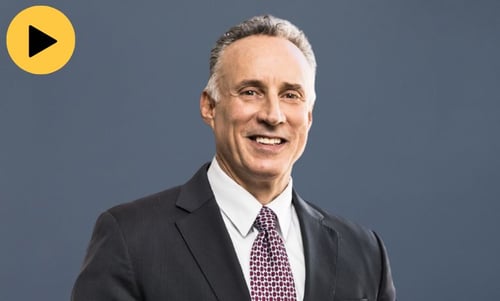
Will Things Change After the Midterms?
Marc Chandler, Bannockburn Capital Markets
Will Things Change After the Midterms?
Marc Chandler, Bannockburn Capital Markets

The End of Economic Primacy
Marc Chandler, Bannockburn Capital Markets
The End of Economic Primacy
Marc Chandler, Bannockburn Capital Markets

People Are Questioning the GDP
Marc Chandler, Bannockburn Capital Markets
People Are Questioning the GDP
Marc Chandler, Bannockburn Capital Markets
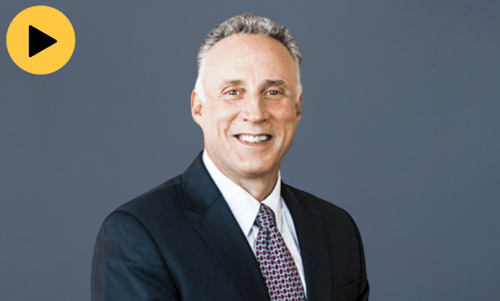
A Profound Sense of Unfairness
Marc Chandler, Bannockburn Capital Markets
A Profound Sense of Unfairness
Marc Chandler, Bannockburn Capital Markets
Transcript
Matt Staninger: Hello, and welcome to OnPoint, a podcast by Oak Street Funding, where we sit down with industry leaders to bring insights to the topics you want to hear about. I’m your host, Matt Staninger, market research analyst here at Oak Street Funding, and let’s get OnPoint. Today, I am joined by Marc Chandler, managing director and chief market strategist at Bannockburn Capital Markets, and we are going to be discussing Marc’s new book, *Surplus: The History of Too Much and the End of Economic Primacy*, as well as results from the recent 2026 midterm elections and what they could mean for the future. We’ll touch on the implications of a surplus economy, the latest Federal Reserve decision to hold rates, how to better manage abundance, and more. Marc, it’s a pleasure that you’re joining me today.
Marc Chandler: Thanks for having me, Matt.
Matt Staninger: Let’s get started with this: when the average person hears the word “surplus,” they often think of prosperity or extra for all. How does surplus become destabilizing rather than purely beneficial?
Marc Chandler: That’s really an important question, because when I’ve talked about the surplus with people, their first instinct is, “Well, my family is having a difficult time making ends meet.” That is really the paradox or the irony. On one level, we do have a surplus. On the other hand, it’s not evenly distributed. And that becomes a problem. In the U.S., for example, about 20% of American children are on some kind of supplemental nutrition program, despite the U.S. having the richest farmers in the world and the most successful agricultural sector. Despite that, so many of our children are hungry. I can see this in different ways as well. Another example is income distribution. Men in the top 10% of the income distribution live about 12 to 14 years longer than men in the bottom 10%. To me, that’s the problem I’m really wrestling with: this seeming conflict between freedom and equality.
Matt Staninger: That talks about some of the larger life implications. Within the book, you connect modern surplus to widening inequality, financial speculation, and political discontent. How do those forces tie back to a scaled global economy that’s highly effective but producing too much?
Marc Chandler: The thing I really focused on is that I think I’m continuing discussions from hundreds of years ago. Almost 100 years ago, Keynes said he thought the economic problem of scarcity, which he called “the economic problem,” would be solved by 2030. I say we solved it a bit earlier than he anticipated, and I want to ask the question: now what? The problem of production has been solved. We can produce more goods and services using fewer people than ever before. The problem, again, is what we do with that. They say there is more plastic in the ocean than fish. My wife and I see how much garbage we generate — solid municipal waste, mostly packaging. And the packaging, whether it’s plastics, which means oil, or paper, which means wood, uses finite resources. Those resources are absorbed, then we discard them and put them in a landfill. I’m concerned about both sides of that equation. I don’t want to take anything away from the incredible success market economies have had in generating wealth beyond our imaginations. Things we take for granted today — my great-grandparents had to go outside to use the bathroom. There was no running water. Central heat and central air conditioning are modern luxuries that we now think of as necessities.
Matt Staninger: I feel personally called out there, as I took out my garbage this morning thinking most of it was packaging. I had to take out an additional chair that had broken over the week, which was all lumber. So that’s very relatable. I think we all can relate to that as well.
Marc Chandler: I don’t think we fully appreciate that when we throw out that packaging, there’s energy that goes into making it, and there are resources that go into it. We’re throwing that out. It’s not just that we have this disposable type of society. Many businesses have built obsolescence into their products. That’s partly what fashion is. Maybe it’s me, but I can’t tell the difference between a 2025 model of a car and a 2023 model. Yet by having new models, it creates fashion. Think about a cell phone. You buy a new cell phone, and up until very recently, you had to buy all these new attachments with it. It’s sort of like what people criticize pharma for — not curing us, but getting us hooked onto medicine that just maintains or manages whatever problems we have. Broadly speaking, businesses do the same thing. This is the challenge: what’s good for an individual business might not necessarily be good for society as a whole.
Matt Staninger: Right. We’ve seen some lawsuits come out from very similar things as well, such as batteries purposely only having a certain amount of time before experiencing obsolescence. That covers the surplus side of things really well and defines what you meant by surplus. The other half of the title involves the end of economic primacy. What do you mean by that, Marc, and why do you think traditional economic measures may no longer be enough to define progress?
Marc Chandler: That’s a really good point. I have this historical perspective. Even though I spend my days trying to understand what’s going on in the capital markets, I have a master’s in American history. Keynes wrote an essay in the early part of the 20th century called “The End of Laissez-Faire.” He argued there was going to be a role for government. Then there was Peter Drucker, who we think of as a management guru. He was a young man in Germany as fascism was rising, and he started documenting this. He called his book of that era *The End of Economic Man*. I’m trying to continue that dialogue with “the end of economic primacy.” Here’s what I think it means: Most of the time in our business careers, if we come up with an argument that says this way is more profitable or this way is more efficient, it carries the argument. It has gravitas. I think that is no longer the case, partly because capital itself is in surplus. It’s not just widgets or other products that are in excess supply, but capital itself. I’ll give you a quick illustration. The U.S. 10-year yield is below 4.9% right now. Inflation is about 3.7%. Even though the nominal rate looks high, the real rate, when adjusted for inflation — which is what we ultimately pay as businesses — is relatively low. Interest rates are low because of supply and demand. The supply of capital exceeds the demand for it, meaning the efficient, effective use for it. The end of economic primacy gets to this idea that capital has reached a point, like other products do, of diminishing returns. When I was younger, I moved to New York from Chicago and I was broke. I would have a pizza and a Coke every day for lunch. It was about $2.50. By Friday, you couldn’t pay me to have another slice of pizza. It had reached a point of diminishing returns. I think capital has done the same thing. Because capital has reached its point of diminishing returns, it means other interests can rise. Capitalism doesn’t just produce goods and services; it produces interests and values. It’s sort of like Abraham Maslow’s hierarchy of needs. After individuals have shelter, clothes, and food taken care of, we have the bandwidth to think about other things — art, philosophy. I think that’s what has happened to society, especially in the U.S., Western Europe, and parts of Asia — high-income parts of the world that, for the most part, have had peace and prosperity. That allows us to move up Maslow’s hierarchy of needs and think about other things. For example, in the midterm elections, many communities that had initiatives on their ballots had questions about AI. In New York, where I’ve spent the last 30 years, people recognize there is the geological formation for fracking, but they decided not to do it. That illustrates that there are other interests that rise and challenge just what is profitable, partly because it is predicated on us having conquered scarcity and now having a surplus of capital.
Matt Staninger: So you’re taking one of those conversations that has been around for a long time and applying it to today’s measures, where capital has really outpaced even the physical material that has been discussed for a much longer time.
Marc Chandler: That’s right. The shocking thing is that before the Great Financial Crisis and during COVID, at its peak, there was $17 trillion of bonds that had negative yield. A negative yield is hard to get our heads around. The only thing I could compare it to is when I go to an ATM that is not my bank, and they charge me $2 to take out $100. It’s almost like a negative interest rate. But imagine $17 trillion of negative-yielding bonds. And right around when COVID first broke, oil prices went negative, too. If you had a barrel of oil, you couldn’t sell it. You had to pay someone to take it from you. That is the kind of perverse world that’s possible when there is such a large surplus.
Matt Staninger: It’s amazing. And bringing in the thoughts of AI and the boost of productivity, it’s really starting to become much more of a day-to-day discussion as well.
Marc Chandler: Yes. These are big-picture issues, and what I hope the book achieves is helping frame and begin what has to be a very important discussion.
Matt Staninger: We talk about asset prices, capital flow, and productive capacity. Those factors are all central to today’s surplus economy. How should investors or market observers think differently in this environment?
Marc Chandler: I think one thing surplus means is that it’s hard for social relations to reproduce themselves. I think about capital. If you have a very low real rate of interest, then how do you accumulate more? Keynes talked about this. I think he called it the “euthanasia of the rentier class.” He thought interest rates would go so low that rentiers — the term at the time for coupon clippers, people who live off income from lending to others — would be wiped out. They couldn’t just clip coupons and live off that. I think it tells me that real interest rates, adjusted for inflation, are low and will stay low. Even with this AI buildout, everybody is talking about how many bonds these hyperscalers are issuing and how big it is compared to U.S. Treasury bond issuance. But the S&P 500 could fund the whole AI buildout with about two and a half years of revenue. The AI buildout looks huge. But if you look at overall U.S. investment, it’s basically flat. The AI boom in investment is offsetting and compensating for the decline in investment elsewhere. So I’m not sure the AI buildout really absorbs the surplus, and I think that’s what we still have to wrestle with.
Matt Staninger: In this net-zero situation, do you see this surplus concept plateauing at this point in time, or do you see it decelerating or accelerating? What kind of trend do you see looking into 2030, 2040, and beyond?
Marc Chandler: I found someone who, before I joined Bannockburn, worked at a bank about 100 years before me and advised presidents. He argued that we had a surplus of capital back then in the late 1800s. He talked about “capital congestion.” I think we find other social and institutional arrangements to help absorb the surplus and deal with it, but it only lasts for a few decades. Think about the Reagan-Thatcher solution coming out of the crisis of the 1970s. It lasted maybe from the early 1980s through the tech bubble — about 20 years. Now we’re stuck with it again. My concern, and what I try to write about in the book, is that we lose the vocabulary and the vision. Every generation has to come to it anew. I’m trying to pull on the threads of this idea that capitalism — and I have a lot of friends who are very critical of capitalism and market economies, but I’m not in their camp. I believe in celebrating the success of market economies. We have achieved so much. Now I want to ask: now what? When I was growing up, I grew up in a very low-middle-class family, kind of typical of the time: single mother, children, and a father who abandoned them and didn’t provide financial support. I have a brother who’s a year younger. One year, we had two pairs of shoes between us — a pair of gym shoes and a pair of dress shoes. Whoever had PE class that day got the gym shoes. Fast forward: my son is through college now, but when he was in college, he had four, maybe six pairs of running shoes. They were fashion statements. That illustrates how far we’ve come, but also how much we still wrestle with this issue and the inequality that comes from it. My concern is that there’s a profound sense of unfairness. When someone like Jeff Bezos has so much money that he can’t spend it all on Earth, it strikes me as a stark example of surplus. I would say: allow your workers to get higher pay. Sometimes that might mean unionization. Lower the price of your goods. But instead, he has too much money to spend on Earth. That illustrates this profound sense of unfairness. I appreciate that he works hard. We all do. But I also have a lot of friends who were born on third base and think they hit a triple.
Matt Staninger: That’s a funny way of looking at it. I appreciate you sharing your story and upbringing as well, because you’ve gotten to see a wide area of the spectrum, both from personal experience and what you’ve been exposed to. That creates some hopefulness. Of course, Jeff Bezos is a little bit of an outlier in terms of the typical situation, but there’s an ultimate feel of hopefulness in there. You describe this book as ultimately hopeful. What kinds of institutions, policies, or cultural shifts could help society better manage the abundance that’s being described and where these outliers could exist?
Marc Chandler: That’s a really important question. I’m the type of person who is very reluctant to tell other people how to lead their lives. Instead, I want to suggest that there are two paths. If we continue on this path, I’ll give you another concrete measure now that the election has passed. In the year 2000, the top 100 Americans contributed about 0.25% of campaign funding for the national election — a quarter of 1%. In 2024, our most recent national election, it was 7.5%. Besides campaign finance reform, which there seems to be bipartisan agreement to talk about but not do anything about, I think that is the problem. What I’m trying to do in the book is frame the problem. To me, the problem is that America’s founders had a very revolutionary set of ideas. That’s why we call it the American Revolution, not just a war for independence. We had a revolution in mind. That revolution was the radical unification of freedom and equality. What our founders meant by freedom traces back to ancient philosophers: freedom was self-determination. When I taught at NYU, at the Center for Global Affairs, I taught there for over 20 years. Every year, I would ask my students: imagine if tomorrow the government decided there were too many breakfast cereals. You go down the cereal aisle and there’s a whole aisle full of choices. Imagine the government said, “Tomorrow, we’re only going to have something that gets soggy in milk, like cornflakes; something that doesn’t get soggy in milk, like Cheerios; and some kind of healthier granola cereal.” If the government said you could only have those three breakfast cereals going forward, I would ask my students how many would think their freedom was less. Typically, they would say yes. That is to say, we have sort of morphed freedom — self-determination and shaping the community in which one lives — into consumer choices. I don’t know how to arrest that. The first thing is to be mindful that this is what happened, and to go back to this idea of freedom being about shaping the community in which we live. I saw this breakdown of civic responsibility during COVID. Imagine if the government said tomorrow, “We’re going to build a place where you can come and sit all day long. You can borrow things based on your signature and promise to return them in two weeks.” After we’ve gotten rid of public restrooms and public water, I don’t think we would have the civic wherewithal to create public libraries today. That’s why I say I’m trying to bring back some old-fashioned ideas and values, and look at how far we’ve deviated from them. We need to see if we can go back to some of those values that bring freedom and equality back together. I think that is the key. Without that, I’m afraid we end up going back down to the world in which the young Peter Drucker was writing about in Germany in the 1930s.
Matt Staninger: Fair enough. I know you started that by saying you can’t really tell others how to run their lives or livelihoods, but let’s get into a little bit about potential solutions. They’re going to be highly subjective with today’s society and with where surplus has really stretched to. A lot of those are also going to be relatively unprecedented. A little spoiler alert into the book here: Can you take us through a little more color on the thought process of a progressive income tax and what those levels and constraints would be on market forces?
Marc Chandler: Those are very difficult issues, and I try to avoid focusing only on taxing income. Ultimately, if we’re going to try to fix this problem of inequality, something will have to be done. Maybe it’s not so much income. Maybe we focus on wealth. Imagine a tax like they have in some U.S. states, which taxes based on the size of your car’s engine. That’s like a subtle wealth tax. I don’t think this is about saying we can’t have billionaires. But we need to remember that in our lifetime, going back to the early 1980s or late 1970s, corporate tax rates have fallen sharply. At the same time, large multinationals — not our clients, small and medium-sized businesses, but large multinationals — have a surplus of capital. They’re buying back their own stock rather than building new capacity or innovating. So our lunch is being made by Chinese producers, while in the auto sector, for example, businesses give money back to shareholders because they can’t think of a more profitable place to put it. We do have a tax on share buybacks, but it doesn’t look very effective. Raise the tax, for example. This is not about “soak the rich.” This is about thinking more about civic responsibility and the danger. As a strategist, I’m not only concerned with the upside. I’m concerned with the downside. If you go to a movie theater or on an airplane, they say, “Make sure you know where the exits are.” What’s the downside of this? I’m afraid this profound sense of unfairness — not just in the U.S., but also in Europe, where we’ve seen widespread demonstrations in recent weeks — has a common theme. Whether it’s French students, or renters in Spain and Portugal, there’s a widespread sense of unfairness. We have to recognize that sense. It means we’re in a messier political environment. The center is not holding. We can talk about the U.S. midterms, but you see this in Europe as well. Look at what’s happened. The far right has won its first state election in Germany. Next April, the French will have an election. For the first time, Le Pen, who is the far-right candidate — nationalistic, anti-immigrant, anti-EU — looks like she is not only running ahead in the polls, but many people expect her to win. That’s why ECB President Lagarde seems to be resigning early, to allow the current political process and current political parties, like President Macron’s, to help name the successor rather than potentially have Le Pen do so in April. To me, these are very profound political issues. If we don’t do anything, which is of course a possibility, what happens? I think the drift is very profound and in a more anti-democratic direction.
Matt Staninger: That brings us to another area of discussion and alludes to some of those recent events happening, maybe even well beyond that in this modern-day, very fast, robust society. What are the most unpredictable aspects of a surplus environment that we’re currently seeing?
Marc Chandler: One aspect of the surplus that we’re seeing is that we take it for granted. Interest rates are low. What do we do with the surplus? I think about all these outlets we’ve created for surplus in the United States. One of them is legalized gambling. It’s not a moral issue for me. I gamble myself. I like a good poker game. Occasionally, I’ll bet on the Kentucky Derby. I tend to lose money there. But I think about what happens when you legalize gambling and the government sanctions it by saying you can go ahead and do this. You see what happens in communities, especially among men who are particularly vulnerable to the pressures and the family strain. I think about legalizing drugs, too. It’s one thing to have small-scale or entrepreneurial types, but then to legalize it — that’s another way of absorbing surplus. What are people doing with their money? Again, this speaks to civic responsibility and civic duty. I’m not speaking out of altruism. I learned during COVID that the homeless person sleeping outside my house with COVID made my family unsafe. How can we help him to make my family safer? How do we help those kinds of people to make your family safer? We have to really think about these things, because otherwise I think we move in a bad direction. As individuals, we’re paying high prices for mortgages right now. But when adjusted for inflation, interest rates aren’t really that high. When the price of something is not high, people tend to use it and overuse it. I think that’s where we are. Capital itself has a tough time reproducing itself. Think about the middle class. My son went to a small liberal arts college in Ohio, and I think I paid about $70,000 a year for tuition. These days, a small liberal arts college where students get a lot of personal attention and can pick a lot of classes can cost $100,000 a year. A new car is $50,000. The median family in America makes only about $65,000 a year. So we have a real problem. This is where the rubber hits the road. There’s an expectation that if you do the right thing, study hard at school, get a good job, and earn a good income, you’ll be able to support a family. Increasingly, that seems less and less likely for people. I was the first one in my family to go to college. My father was a plumber. Even as a plumber, he was able to support a stay-at-home wife and four children. We can’t do that on one salary these days unless, perhaps, you’re the CEO of a big internet company. For many of us, we are struggling to make ends meet while we see so much surplus around us. We work hard, we do the right things, and yet this sense of unfairness cuts across demographics, class lines, and religion. It seems to cut across the whole population. Wherever one is, one senses this profound unfairness. I think that means things cannot go on like this without some radical changes, for good or for bad. I’m optimistic because I think ultimately it’s sort of like what Winston Churchill said about America: Americans can be counted on to do the right thing after they’ve exhausted the alternatives. I think we’ve exhausted a lot of alternatives.
Matt Staninger: Marc, I think we talked a little bit about what post-scarcity progress should look like. What should we really be measuring instead of simply growth or wealth creation to help fuel a stronger post-scarcity environment?
Marc Chandler: That’s a good question. One of the things that has happened because of this great inequality is that people are now questioning GDP. GDP was never really designed to be an overall measure of happiness or prosperity. It is just a measure of how many goods and services an economy produces. It tells us nothing about distribution, which is part of the problem. Because of distribution issues in the U.S., people increasingly talk about a K-shaped economy. A lot of consumption is being fueled by those who have. Those who don’t have are fueling their consumption through borrowing, consumer credit, and home equity loans. These things have really weakened household balance sheets, even as people make ends meet. Wages aren’t really enough. In fact, over the last five or six months, wages in the U.S. haven’t kept pace with inflation. We are becoming poorer in real terms, just as the needs for mobility go up. We can’t count on education being the key access to mobility the way we could 60 years ago.
Matt Staninger: Very good. Thank you for sharing those insights on your new book, *Surplus*, which has been newly released and is available now. Let’s shift over to a very recent topic that’s ongoing and that has been relatively surprising to most: the midterm election. What stood out to you most as we’ve seen quite substantial results here?
Marc Chandler: What surprised everybody, even though a lot of the polls were suggesting it, was that there really was this blue wave. But it’s not really unprecedented. I think in Obama’s first term, Democrats lost even more House seats than Republicans did just now. So I’m hesitant to read too much into this. I know a lot of people who voted for Obama and then voted for Trump. I’m hesitant to call these kinds of elections a major turning point or a shift in the American political climate. I think we need to see the presidential election to help confirm that. The other thing that occurs to me with the election is how little things might change. We’re looking at a U.S. budget deficit this year of around 6% of GDP. It looks like it will be around the same next year. If there’s one issue that has really come to the fore — and probably before the election it was already showing some signs of cracking — it’s the AI meme. The AI buildout has been important for driving inflation for those AI-related products. It has helped drive the U.S. trade deficit. It has helped drive U.S. growth. If it’s cracking, won’t that have implications for Fed policy? I think the election made people reconsider. As the results were coming in Tuesday night, and then again on Thursday, we saw foreign investors, particularly in Asia, selling U.S. assets. They were selling U.S. equities. In America, we began buying U.S. equities on Wednesday after the election. The Nasdaq closed higher, but there are still cracks in the AI theme. We’re seeing the ramifications as people question AI. Will Democrats regulate it? Will it be state regulation or federal regulation? What about the buildout for data centers and individual initiatives that seem mostly to reject them? I think the AI element and the knock-on effect on Fed policy are probably the most important parts of the election. As participants in politics, we sometimes confuse partisanship with the bigger picture. I don’t really see a robust statistical relationship with how markets respond to midterm elections. What I do see may be more about the presidential cycle. First, in the fourth quarter, the quarter of the midterm election, the stock market typically does well. The most robust statistical relationship with the election is the third year of a presidential term. The S&P typically goes up about 14% on average, which is twice as much as in any other year of the presidential cycle. 2027 is year three. That suggests we ought to be a bit optimistic about the stock market as we finish this year and enter next year. But I’m not sure how much we’re going to see in terms of concrete differences. Sometimes I worry that when I go to a restaurant and they offer me a soft drink and ask if I want Pepsi or Coke, our politics may be very similar. Of course, for partisans, we feel very strongly — we prefer Coke or Pepsi. But from a big-picture view, I think most of the debate between Republicans and Democrats takes place within the Tory Party in the U.K., for example.
Matt Staninger: Great insight there. Now, trying to connect that to this surplus environment, we see these wild swings, and it has almost become normal from a macro view. Breaking it down into a day-to-day perspective, we’re seeing hundreds of billions of dollars regularly get pumped into or out of individual markets. With this surplus environment and the change we’re seeing congressionally, what call to action would you give or advise to incumbent congressional electees, trying to connect with the surplus environment and all these wild swings that we’re continuing to see and almost getting numb to?
Marc Chandler: If I were to advise politicians who have been elected, I would say to focus on equality. The lack of equality seems to be a bigger source of anger and angst than scarcity. Inequality trumps scarcity. I think politicians should think of ways to address that inequality. It’s very serious, and I think it’s dangerous. It reminds me of something George Carlin, the comedian, once said: We have cinnamon-flavored floss, but there are people sleeping homeless outside. That’s the kind of contrast I would like to encourage our politicians to take seriously.
Matt Staninger: Shifting a little bit here, thinking back about a year ago, the December 2025 Fed plot had the median expectation for the federal funds rate at the end of 2026 — which we’re quickly approaching — closer to 3.4%. Not a single member at that point had expected it to go above its current level of 3.75% to 4%. We’re, of course, expecting another hike as the most likely case for December. With all these changes this year from expectation to reality, how reliable can we suspect the outlooks for 2027 to be, and how should a business owner prepare for 2027 given the current outlook?
Marc Chandler: You have a very important point. It is about how uncertain and fluid things are. When the Federal Reserve met last December, they didn’t know we were going to go to war with Iran at the end of February. When many people look at what’s causing inflation in the U.S. right now, they cite two things: tariffs and the war. It’s ironic in a way that President Trump wants lower interest rates, but it’s his policies that have sort of stymied the Fed from being able to deliver them. Tariffs boost inflation. It’s not just a one-off, either, because we have this drip feed of tariffs, and more could be coming down the pipeline. The war in Iran is also a factor. The International Energy Agency said it was the biggest disruption in the oil market in history. It’s not just oil. It’s natural gas, fertilizer, chemicals, and elements needed even to produce semiconductor chips. The first thing I would say is that things are very fluid now, perhaps more fluid than we’re used to in our careers. Ironically, the Cold War with the Soviet Union was a fairly stable period. Now it seems like geopolitics are a mess and the old rules don’t apply anymore. There’s a higher level of unpredictability. But business people are always operating in a world of high uncertainty. That’s why I think these time-tested practices matter: hedging and having a disciplined hedging program, whether you’re hedging interest rates, currency exposure, or commodity exposure. What are the big risks that keep you up at night? Many of them can be managed through financial instruments. For businesses in this world of surplus, with geopolitical fluidity and the dramatic rise of revolutionary technology, there is great uncertainty. I think we need to stick to our knitting, and our knitting is financial prudence. Know the risk. Manage it. Sometimes managing that risk can mean hedging it. Sometimes it can mean finding internal offsets. There are different ways businesses can manage it, but the level of uncertainty and fluidity is very great. I’ve never encouraged people to make a decision based solely on what the Federal Reserve says it is going to do or what economists, including myself, think is going to happen in the markets. The whole idea is that there is a high degree of uncertainty. Don’t let people like myself fool you into thinking that we’re confident about the future. All of our forecasts have a wide confidence interval around them. It’s like trying to forecast the weather a year from now. We might say that in six months, it will probably be a bit colder than it is now, but we can get much closer on the temperature for a week from now than we can for six months from now. I think the same is true with geopolitics and financial markets. We have a better idea of where the range is likely to be in the short term than in the long term. Because of that unknown — Donald Rumsfeld’s “known unknowns” — business people and investors need to manage that, identify the risk, and manage it. Partly due to the democratization of capital markets, even small and medium-sized businesses now have access to products and tools that previously were only available to large multinational companies.
Matt Staninger: Great perspective there. Day to day, you’re typically dealing with the global exchange and Forex side of things. What are some of the most interesting occurrences or current events within global exchange spaces that U.S. small and mid-sized business owners should be aware of?
Marc Chandler: One of the most important developments, which is not going to make the front page of the newspapers, is that in the U.S., I think we’ve already accepted the mindset of a new Cold War with China. Whenever there’s a problem in the world, blame China. I call it the “China First” camp. Even when you have all this social unrest in Europe, what did the leaders of the two largest countries in the Eurozone do? Amid these protests, Germany and France worked out an agreement for China to reduce its auto exports to the EU. That sounds important, but it doesn’t do anything for the demonstrators. We need to recognize that China is not Japan. China does not rely on the U.S. for security. We cannot push China around the way we could push our allies around. Think about the Plaza Accord back in 1985, when the U.S. got together with other major countries to drive the dollar down because it was overvalued and protectionist pressure was rising in the U.S. Some people say we should do that same thing to China. But I think what we don’t appreciate is that the Chinese currency has appreciated by almost 5% this year. It is really one of the strongest currencies in the world this year. There is one G10 currency, Norway’s, that has been stronger than China’s. That’s partly because we had a huge rally in oil prices and Norway is a big oil producer. Within Asia, there might be one country, South Korea, that has a stronger currency than China. The currency move in China is relatively small, given that the IMF thinks the currency might be 20% to 25% undervalued. The currency has gone up about 5%, so it’s a small down payment. But the other global imbalances — the U.S. deficit, the U.S. current account deficit, and Europe’s lack of investment — have not changed. When I look at the three big economies — China, the U.S., and Europe — and ask which country has taken any step toward addressing its problem, I’d say China has come the closest, even though it’s a very small and arguably statistically insignificant down payment. China has an appreciating currency, and that is an important message for Americans who are exporting to or importing from China. When the dollar is rising, many in China are happy to accept U.S. dollar payments. They’re getting an appreciating asset. But now, with the RMB appreciating and the Chinese currency appreciating, they may be less likely to take dollars. That means small and medium-sized U.S. businesses have a currency issue that they didn’t have a year or two ago when the Chinese currency was weakening. The other thing in currency markets is to appreciate that when you hear Treasury Secretary Bessent talk about it, it sounds like all these countries are purposely keeping their currencies down. They complain about Japan, China, South Korea, and Taiwan. Yet what they all have in common is an overvalued dollar. Before we tell other people what to do, we should look at our own house and our own situation. If we wanted a weaker dollar — that is, a stronger Chinese currency or a stronger yen — we might need to change U.S. policy. Why is the dollar strong? Partly because the U.S. has a 6% budget deficit. We run our economy hot. By running our economy hot, I mean economists like myself look at what we call real final domestic purchases. For GDP, it strips away trade, inventories, and government spending so you get the true signal of the underlying economy. For the second quarter in a row, it rose by more than 4%. The U.S. economy is growing faster than our trading partners. We have a huge budget deficit. We’re sucking in the world’s capital. What’s interesting now is what capital we are sucking in. It used to be that foreigners and foreign central banks would buy U.S. bonds. That’s not the case now. Foreign investment coming to the U.S. is primarily going to the U.S. equity market, which is the AI story and which creates vulnerability. I find that these capital markets are really one big capital market, and they often move with a certain logic together. I know that’s simplified, and reality is often a little more complicated, but it’s an easy rule of thumb. There are exceptions, but that’s generally the pattern.
Matt Staninger: Marc, that’s a fascinating piece of conversation, and really, the whole conversation has been incredible. I always appreciate having you on, as I learned a lot. I’m sure our audience did as well.
Marc Chandler: Thanks for having me, Matt. I really appreciate it.
Matt Staninger: And to all of you listening to OnPoint, a podcast by Oak Street Funding, thank you as well. I’m Matt Staninger, and tune in next time when we sit down with more industry leaders as we get OnPoint. Don’t forget to rate and review on Spotify, like and subscribe on YouTube, and follow us on Instagram for more insights and behind-the-scenes content. See you next time.